FAQ
LYNX Scan FAQ
Hidden cameras, GPS trackers, everyday use and guarantees: answers to your questions, including the limits to understand before and after buying.
Detection & alerts
What optical and radiofrequency modes can — and cannot — find.
The optical lens-finding mode, described as ‘infrared’, may help reveal a lens reflection behind a small opening. This is only possible if part of the lens is visible, illuminated and aligned with your viewing direction.
A tiny opening, a recessed lens, an unfavourable angle or an obstruction can prevent a reflection from being seen. Inspect objects from several angles and at close range where safe, without dismantling them. Screws, shiny surfaces and other reflections do not prove a camera is present. Detection of every pinhole camera is not guaranteed.
Optical inspection does not rely on wireless transmission: it may reveal an accessible lens even if a camera is switched off or records locally to a memory card. It does not tell you whether the device is working or recording.
Radiofrequency (RF) mode looks for active emissions within the advertised 3 MHz to 8,500 MHz range. A switched-off or wired camera, or one recording without transmitting, may therefore produce no RF alert. The two modes complement each other, but a check without alerts does not guarantee that surveillance is absent.
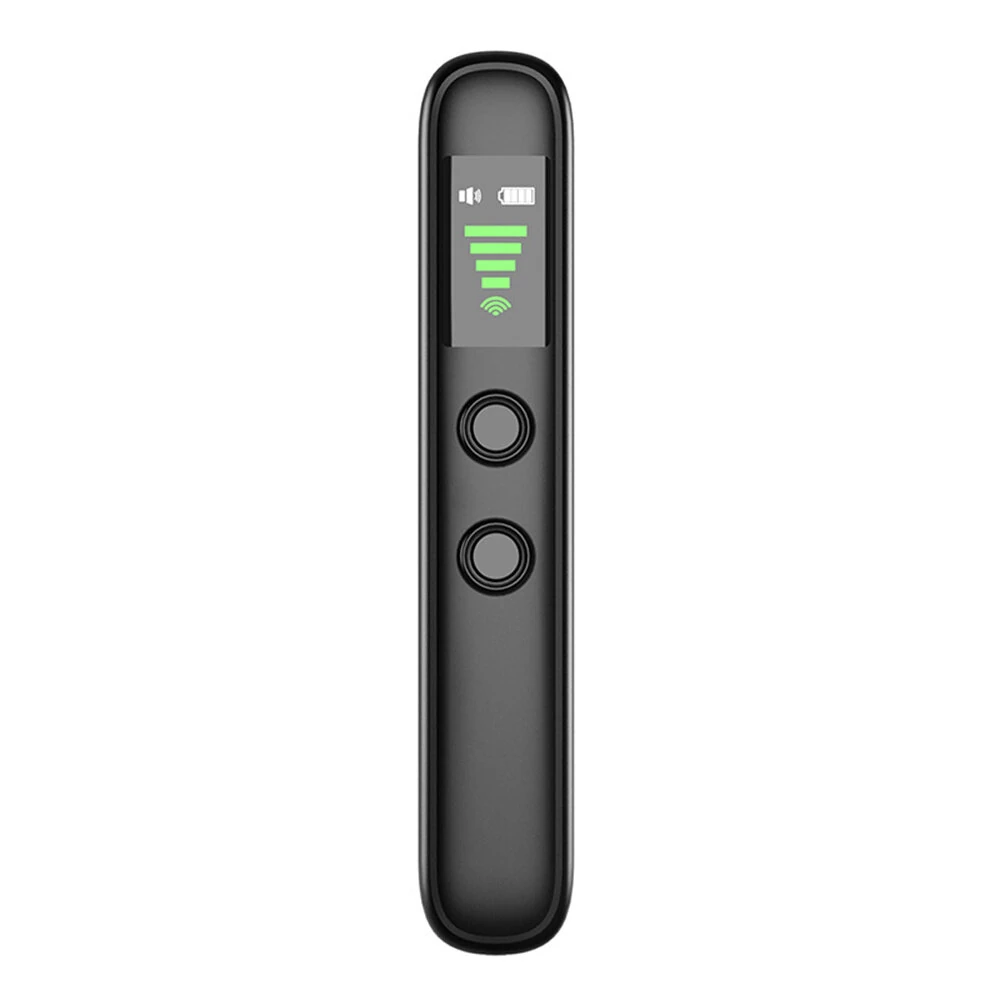
The product has 4 sensitivity levels. High sensitivity helps with an initial sweep; lower sensitivity may help locate a nearby source when the LED bar reacts everywhere. Adjust gradually as described in the manual rather than always using the maximum setting.
Wi‑Fi, Bluetooth, phones and ordinary equipment can trigger alerts. The LED bar, beep or vibration indicates a response to a signal, not the identity of the device or proof of spying. Compare readings at different locations and repeat the check: an intermittent transmitter may stay silent while you pass it.
Park somewhere safe, switch off the engine and start with a visual check of the cabin, visible areas under the seats, the boot and accessible exterior surfaces. Do not crawl underneath an unsecured vehicle or remove trim.
RF mode may help if a tracker is transmitting during your check within the supported range. It does not detect GPS itself: a device that only receives satellite signals, stores locations or transmits intermittently may go undetected. Your phone, Bluetooth or the vehicle’s telematics can also cause alerts.
If you see an unfamiliar box, do not disconnect it or touch wiring. Photograph what is visible from a safe place and ask a qualified professional to identify it.
No. A device may be concealed, switched off, outside the advertised frequency range or silent during your check. Optical inspection needs a visible lens; RF inspection needs a detectable transmission at the time you scan.
LYNX Scan does not certify that accommodation or a vehicle is safe and does not automatically identify the type of transmitter. If credible concerns remain, put your safety first and seek help from the platform, authorities or a qualified professional, as appropriate.
What if I find something suspicious?Still have a question?
For help using your device or reporting a problem, describe the situation and include your order reference if you have one. Do not send payment details or intimate images.
Contact customer service